How to Take Care of a Cat After Spaying or Neutering For First-Time Pet Owners
When getting a cat as a pet, one of the important things that you need to prepare yourself for is eventually desexing them. But how does cat care after spaying or neutering work? So, here is a full guide on how to take care of a cat after spaying or neutering.
When it comes to spaying or neutering a cat, there are a lot of questions that a pet owner can ask. What is the benefit of spaying or neutering a cat? When is the best time or appropriate age to spay or neuter a cat? How does cat care after a spaying or neutering procedure have to be done?
Hence, here is a guide on how to take care of a cat after spaying or neutering.
Full Guide: How to Care for a Cat After Being Spayed or Neutered
First and foremost, spaying or neutering is the process of surgically removing a cat’s reproductive organs. It is done to a cat when they are between the ages of six and seven months old, but it can be done at any time after they become a teen. Spaying is done to a female cat by making an incision in the lower abdomen and then removing her ovaries or uterus entirely.
As for neutering, it is done to a male cat by making an incision in their scrotum and then removing their testes. It’s fairly obvious that the cat is put under anesthesia before undergoing surgery, so even after the surgery is completed, the anesthesia takes some time to wear off.
For this reason, veterinarians recommend that pet owners fast their cat for at least 12 hours before it undergoes surgery. It is okay to give them water, though, because we can’t have our beloved fur babies being dehydrated.
Afterward, for both procedures, the incisions are closed completely with suture stitches, which help in the cat’s healing process. These stitches can either be dissolvable, as in they don’t need to be removed, or they are added in several layers and need to be removed after a week or so. And this is where the cat care after spaying or neutering comes in.
👉Related Read: Cat Care Routine: Weekly & Monthly Tasks Explained
Post-Surgery Cat Care: Cat Neuter and Cat Spay Recovery Tips for Pet Owners
Credit: Papaya Veterinary Care
Post-surgery cat care can be a bit tricky because what to expect after cat neutering surgery will depend on your cat. Caring for a cat after surgery has to be tailored to your individual cat. When the surgery is done, and your cat is out of the operating room, they will still be unconscious from the anesthesia.
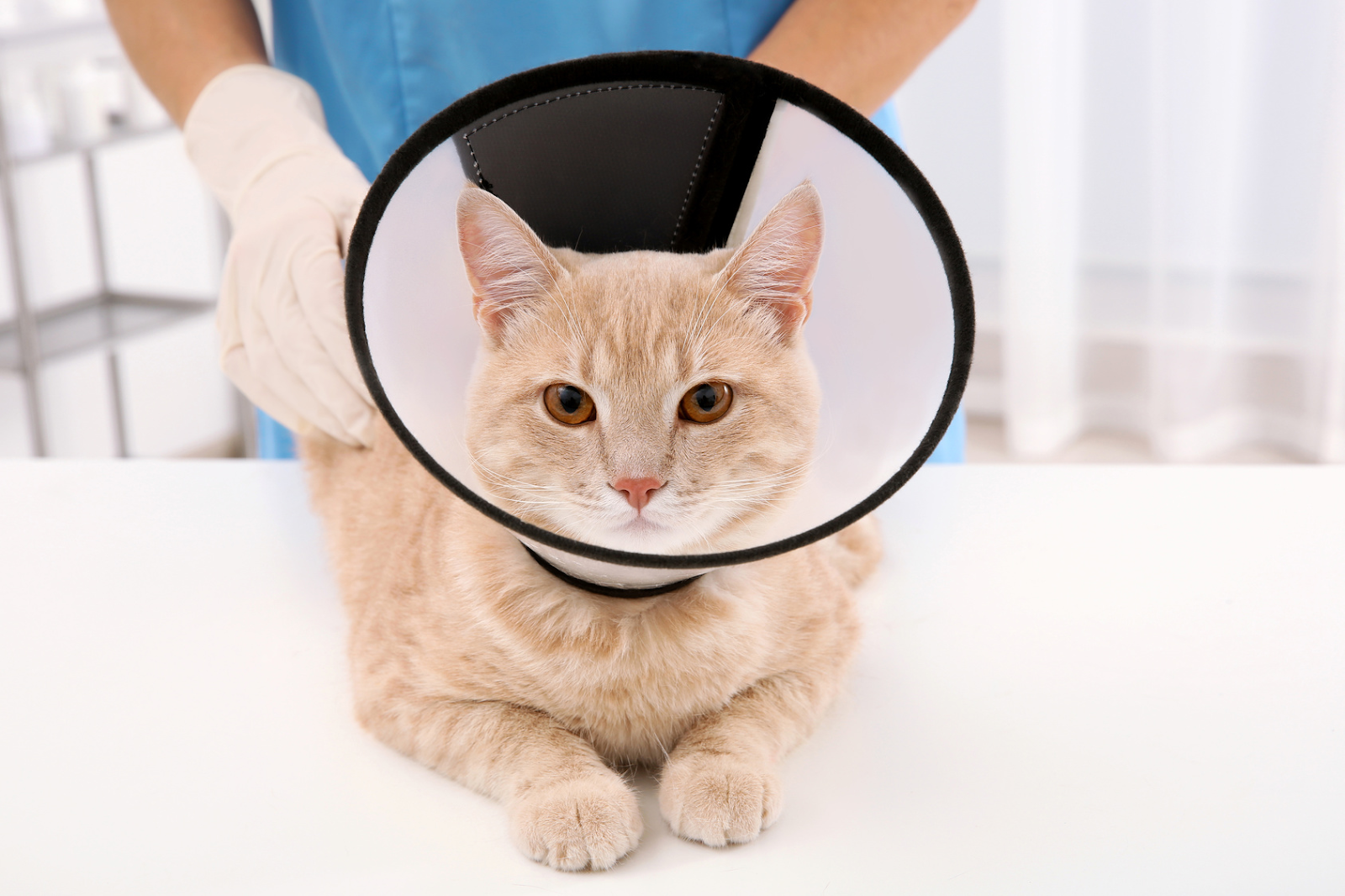
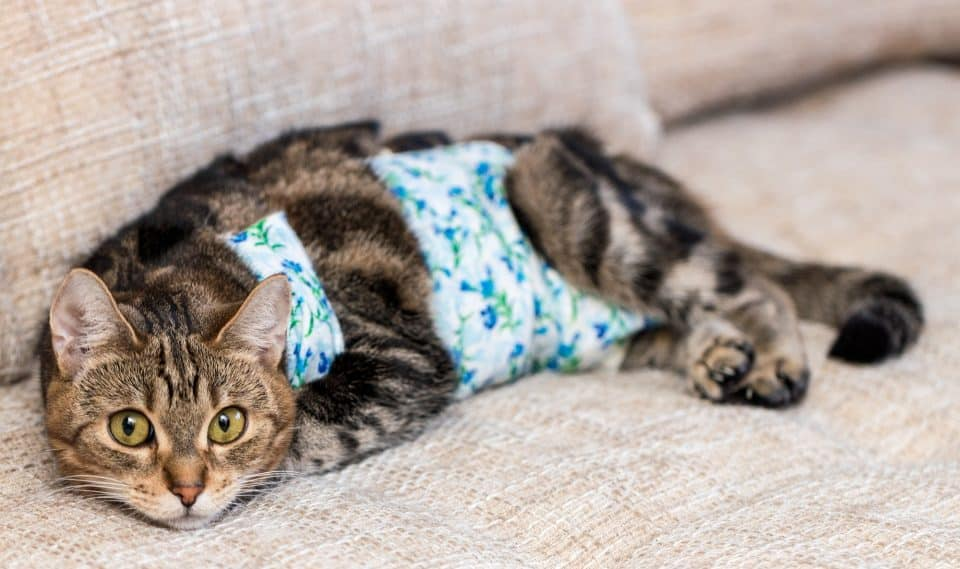
Your cat’s veterinarian will give you cat spay aftercare instructions that you need to follow to the T. The first instruction they will give you, which is important, is to keep the cat comfortable after the spay. You will find that your cat will be wearing a cone collar or an Elizabethan collar alongside a skin-tight onesie to prevent them from licking or chewing on their freshly added stitches.
Cat care 101 says that the collar is recommended to be taken off after a minimum of 24 hours, and the onesie stays on for at least a full week. This is so that they do not infect the incision area with their saliva, which can be dangerous and cause major issues for them.
When you take your cat home, make sure to place them in a soft and heated or warm area where they are confined and can wake up on their own. Do not place them on a high bed or any high place where they can fall off and hurt themselves.
When they do wake up, they will be very disoriented, drowsy, and groggy, which is completely normal. In the next moment, your cat will do its absolute best to take its cone collar and onesie off because it can be uncomfortable for them, but make sure that they stay on. Your cat may also start vomiting as soon as they wake up or a little later, but don’t worry because that is normal.
The cat will show signs of depression alongside a lack of appetite, but that is also normal considering how big a surgery they just underwent. Their temperature might also start to rise, but if it’s too much, you should immediately seek the help of a vet. This time period is known as the recuperation period, and your cat will prefer to be left alone or hide away from you, so try to monitor them from a distance.
Monitor your cat’s level of activity as well and try to limit how much they move or jump to prevent their stitches from coming undone. Don’t try to seek your cat out to pet them; instead, let them come to you of their own accord so they are comfortable.
As for feeding them, for the first 12 hours, try to offer food and water in very small amounts. Don’t be discouraged when they refuse food because lack of appetite is normal. If they don’t eat, then leave food in their usual feeding place in their feeding bowls for them to find and eat themselves.
If they vomit after eating, take away their food and don’t feed them for the next 12 hours to allow their stomach to go back to normal. Besides that, give them food if they show they want to eat it and let them be alone for the time being. These are the only ways to help your cat heal after spaying or neutering.
Besides the above mentioned spay recovery tips or neuter recovery tips, one of the most important things you need to monitor is your cat’s incision. If the incision is showing too much redness, oozing blood, looking swollen, or separating at all, inform your vet immediately.
Other than that, spayed or neutered cat recovery is pretty smooth; it only takes a little patience and time on your part. How long it takes for cats to recover also depends on the individual cat and its temperament after the surgery. So, just try to be by their side and support them through the process.
And with that, our full guide on cat care after spay or neuter is complete. The above mentioned cat spay recovery tips or cat neuter recovery tips are foolproof and are used by all pet owners. If this is your first time having a cat go through the desexing surgery, reading through this article will give you all the necessary information you need to be prepared for post surgery cat care. But you also need to remember that caring for a cat after this surgery depends on your cat’s needs and behavior. So, don’t wait anymore, and for the sake of your cat’s healthcare, go get them desexed so they don’t have to struggle.
Closing Thoughts
We hope we were able to provide you with a clear picture of how to take care of a cat after spaying or neutering, as a first-time cat parent. The process might feel somewhat scary, but we can assure you that it is very safe. So, talk to a vet and follow the instructions.
Happy parenting!