How to Recognize and Solve Cat Stress and Anxiety
We all love our cats. They’re fluffy, funny, and full of purrs. But sometimes, you might notice your feline friend is acting… a little off. Maybe they’re hiding more, acting irritable, or doing things they’ve never done before.
Well, a stressed cat isn’t just a cranky cat; chronic stress can actually lead to serious health issues like urinary problems, over-grooming, and a general loss of happiness.
If you’ve been losing sleep wondering, “How to understand cat stress and anxiety,” you’ve come to the right place. Keep scrolling to find out more about those sneaky stress signs in cats and the practical, loving ways to calm a stressed cat. This is your manual for feline stress relief.
How to Tell If Your Cat is Stressed or Anxious?
Cats are, unfortunately, Olympic-level competitors in the art of disguise. They don’t typically pace or whine like dogs. Instead, they give you subtle hints that scream, “I’m not coping!” You need to pay attention to sudden shifts in their normal routine.
👉Read our ultimate guide to Understanding Cat Behavior: Why Cats Do What They Do
The Top 6 Indicators of Anxious Cat Behavior
When you see a cluster of these, it’s time to take action.
1. Changes in Grooming: Have you noticed any weird bald patches, usually on their lower belly or inner thighs? That’s called barbering, and it’s classic stress behavior. They over-groom to self-soothe. Conversely, a stressed or sick cat might just stop grooming altogether, looking greasy and unkempt.
2. Hiding and Isolation: Yes, cats hide. But if your once-social butterball suddenly spends 23 hours a day under the bed and won’t come out even for Churu treats, you’ve got a serious problem. Persistent withdrawal is one of the most common cat stress symptoms.
3. The Litter Box Problem: Let’s address the elephant in the room: inappropriate elimination. If your cat starts peeing or pooping outside their designated spot, DO NOT assume spite. If you have already trained your cat to use the litter box, first, check with your vet to rule out a medical issue (like a UTI). If they’re medically fine, it’s a cry for help related to their cat stress and anxiety. They’re communicating that something about the environment or the box itself feels unsafe.
4. Vocal Changes: Some stressed cats go silent. Others become loud, persistent yowl-machines. This is especially true if they are dealing with separation anxiety in cats, they howl when you leave because they feel utterly alone and vulnerable.
5. Changes in Eating: Are they suddenly scarfing down their food like a vacuum cleaner, or are they walking away from their favorite bowl? Both extreme eating habits can signal anxiety.
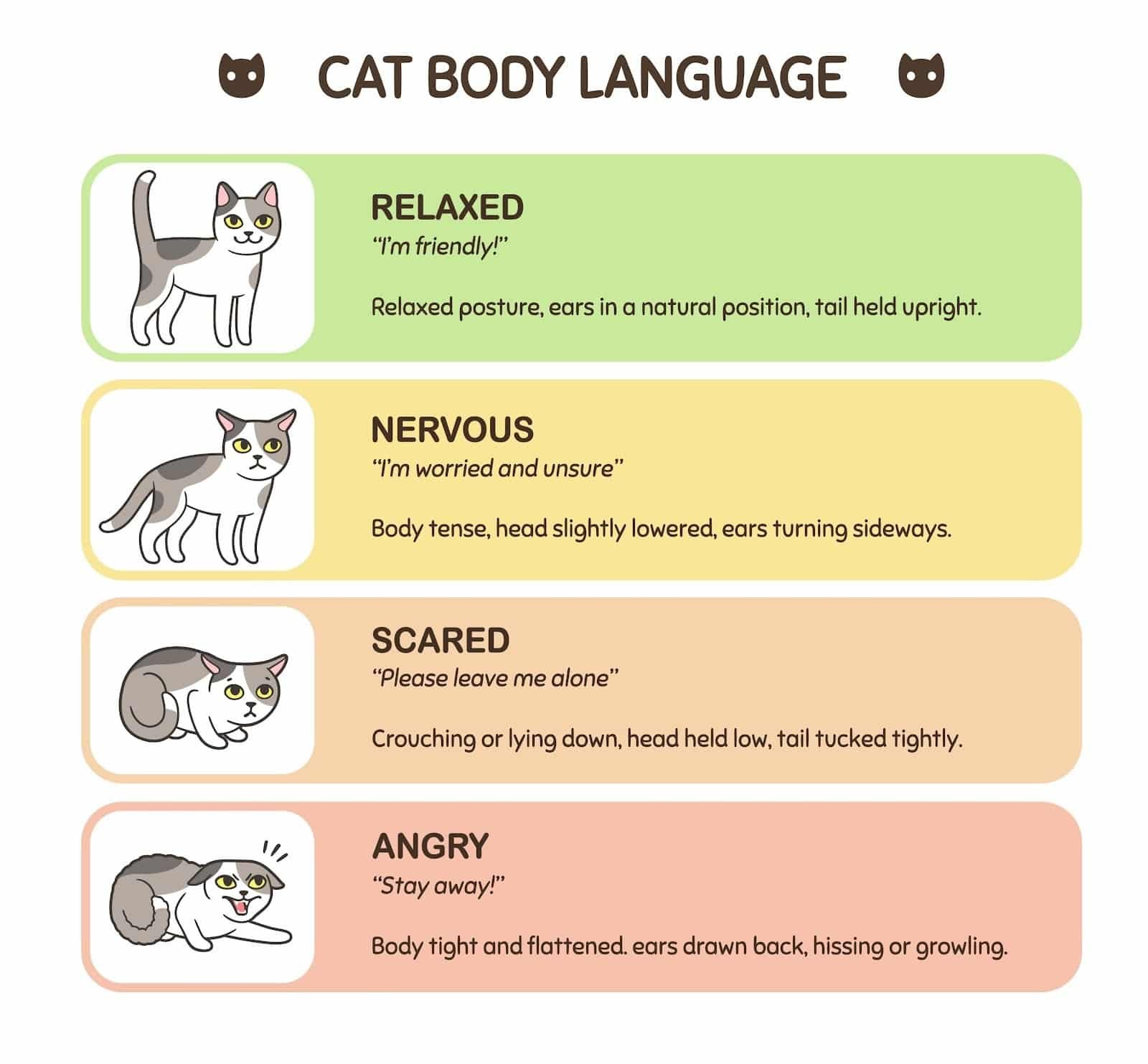
6. Body Language: The ears are flat and turned out (airplane ears). Their tail is low and twitching rapidly. They’re walking with a low, crouched slink instead of a confident strut. These are all huge giveaways of a highly stressed kitty.
👉Learn more: Get the cat care guide for first-time cat parents!
Common Causes of Stress and Anxiety in Cats
If your cat is showing anxious cat behavior, the next step is playing detective. Cats are hyper-sensitive to their territory, so any disruption can throw them into a tailspin. We need to identify the environmental triggers for cats.
Top 6 Ways to Calm a Stressed Cat
Once you know the root cause, you can implement signs and solutions for cat stress at home. The goal to make your cat happy is always to restore their sense of control, safety, and territory.
1. Optimize the Environment for Safety
This is non-negotiable. Every cat needs safe spaces.
2. Implement the “Rule of N+1”
If you have two cats, you need three litter boxes (2 cats + 1 = 3 boxes) and three sets of food/water bowls. This eliminates resource competition, which drastically reduces cat stress and anxiety in multi-cat homes. Place resources in separate rooms so one cat can’t guard them.
3. Schedule the Hunt
A tired cat is a relaxed cat. You need to simulate the hunt every day, without fail.
4. Use Calming Aids and Natural Remedies
These aren’t magic bullets, but they can be a huge help, especially during stressful transitions or for generalized anxiety.
5. Address Separation Anxiety Directly
If you’re seeing intense yowling or destructive behavior when you leave, your cat is likely dealing with separation anxiety in cats.
6. Don’t Be Afraid to Get Professional Help
If those cat stress symptoms are severe (constant hiding, severe aggression, or chronic inappropriate elimination) and you’ve exhausted all these steps, it’s time for the experts. Your primary vet can check for underlying physical issues, but they might also refer you to a certified veterinary behaviorist for specialized treatment, which might include temporary anxiety medication alongside intensive behavioral modification.
Wrapping Up
Ultimately, figuring out the signs and solutions for cat stress at home is about shifting your perspective. Your cat isn’t trying to be difficult; they are simply struggling to communicate a need.
By providing a stable, enriching environment, respecting their need for safety, and giving them the tools to fulfill their instincts, you’ll see that stressed-out badger transform back into your happy, purring companion.
Which of these steps are you going to implement first? Let’s get your cat feeling better!